
Blog · Kids and screens
Short Clips Cloud Kids' Futures
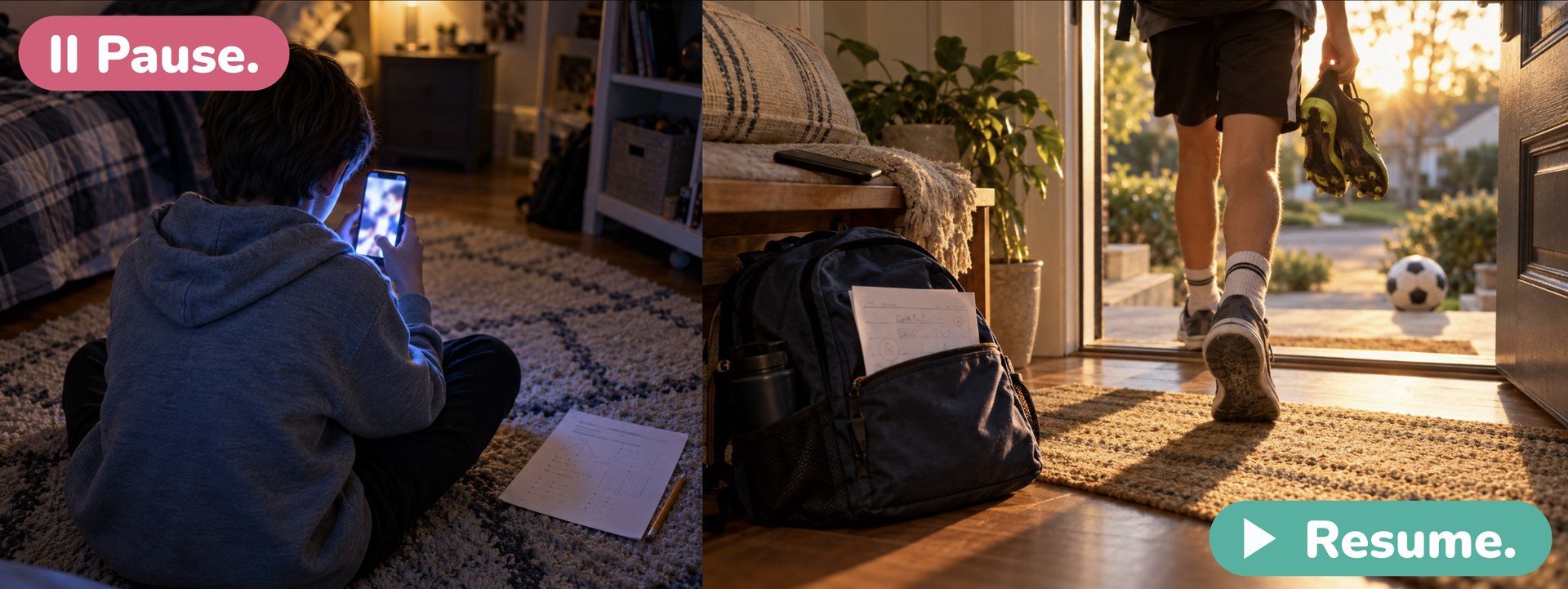
A new Wall Street Journal column by Julie Jargon stopped me mid-scroll. That feels a little ironic, given what it's about.
Julie covers a study of more than 1,500 first-year high school students in China, tracked over a year. Researchers found that a steady diet of short videos, the TikToks, Reels and Shorts that never stop coming, weakened something called future time perspective.
That's a fancy name for something every parent is already trying to teach: the link between what you do now and your future.
When kids lose sight of their future
For a student, future time perspective is what makes homework worth doing. Study now, get good grades, and those grades open doors to their future: the school, the job and the life a kid wants. It's how a kid chooses the worksheet over one more video.
Short videos work against that. Each one is quick, easy and fun, and the next one starts right away. The study found that kids who watched a lot of them had a harder time seeing how today connects to tomorrow.
This is harder for kids than for adults. As Dr. Vera Feuer of the Child Mind Institute explains in the column, the part of the brain that handles planning and impulse control keeps developing until around age 25. Waiting really is harder for them.
The part that gave me hope
The study also looked at how students bounce back from setbacks, like a bad grade. Kids who struggled with those setbacks were more likely to escape into short videos. That creates a loop: a rough day leads to scrolling, and scrolling makes the next day rougher.
So the videos may be less the cause than the symptom. And kids with a strong sense of their own future handled setbacks better.
That made me ask a different question: how do I help my kid see their future?
Stopping is where kids start to understand their future
I've spent more than 20 years studying how people use mobile devices. As a father of twin daughters, I've learned the hardest part of screen time is the moment it ends.
When screen time ends without a warning, there's no future to think about. There's only now, and now just got taken away. Of course kids push back.
A heads-up changes that. "Five more minutes, then dinner" asks a kid to do exactly what this study says is getting harder: picture a moment that hasn't happened yet and get ready for it. Save the game. Finish the round. Tell your friends you're heading out.
It's a small thing. But it's practice, every single day.
Kids don't mind screen time ending. They mind it ending without warning.
What parents can do
The column has good, practical advice. Here's how I'd put it, plus one idea of my own.
- Start with the tools you already have. Apple's Screen Time, through Family Sharing, lets you set app limits on your kids' devices.
- Agree on when short videos are OK. Pick the times together, and explain why. Kids follow rules they understand.
- Keep phones out of the bedroom at night. Sleep matters more than one more clip.
- Give a heads-up before screen time ends. A few minutes' warning turns "stop now" into "get ready," and that's a tiny lesson in thinking ahead.
The platforms are moving too. In an August settlement with 51 state attorneys general, Meta agreed to a default 2-hour daily limit for teens on Instagram and Facebook, plus no access from midnight to 6 a.m. unless a parent allows it. That helps. But no app setting will teach a kid to care about tomorrow. That part is still ours.
More future, not just less screen
Short videos are built to make now feel like everything. Our job is to keep showing kids that their future is coming, and that it's worth getting ready for.
Sometimes that's a talk about goals. Most nights, it's just a 5-minute warning before dinner.
Pause games. Resume life.